
Where is the highest unclimbed mountain in the world?
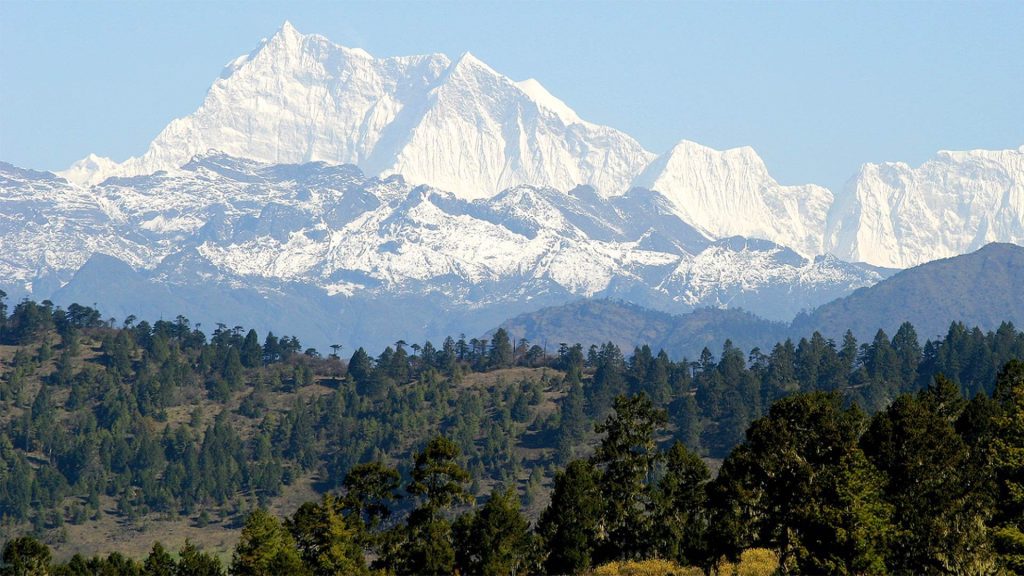
Nestled on the border between Bhutan and Tibet stands Gangkar Puensum, a majestic peak whose name translates to “White Peak of the Three Spiritual Brothers” in Dzongkha. At 7,570 meters (24,836 feet), it holds the distinction of being the highest mountain in Bhutan and, more significantly, the highest unclimbed mountain in the world. This pristine peak represents one of the last great mountaineering challenges, yet it remains unconquered due to a fascinating amalgamation of physical challenges, spiritual beliefs, and government policies.
The Mountain of Mystery
Gangkar Puensum was first measured in 1922 during a British survey of the region, but for decades, maps of the area were notoriously inaccurate. Different cartographic sources showed the mountain in varying locations with inconsistent heights. Some maps placed it firmly within Bhutan, while others positioned it on the disputed border with Tibet. This cartographic confusion would later prove problematic for the early expeditions attempting to climb the mountain.
The region surrounding Gangkar Puensum is one of the most remote and least explored areas in the Himalayas. Situated in northern Bhutan’s Wangdue Phodrang district, the mountain is part of the Bhutan Himalaya range, which extends from the eastern edge of Nepal across Sikkim and Bhutan. The approach to the mountain involves traversing dense forests, crossing high mountain passes, and navigating through valleys that see few human visitors.
The mountain isn’t just physically imposing—it’s also deeply significant in Bhutanese culture. Local beliefs hold that mountains are sacred dwellings for deities and spirits who don’t wish to be disturbed. In Bhutanese Buddhist tradition, mountains are considered the physical manifestations of spiritual forces. The Bhutanese also believe that Gangkar Puensum is home to the mythical Yeti and other legendary creatures. These spiritual beliefs would eventually lead to the mountain’s protected status.
Bhutan Opens Its Doors to Mountaineering
For most of its history, the Kingdom of Bhutan remained isolated from the outside world, carefully controlling access to foreigners. This changed gradually in the latter half of the 20th century, with tourism being introduced in a limited capacity in 1974. However, mountaineering remained off-limits until 1983, when the Royal Government of Bhutan decided to open select peaks to foreign climbers.
This decision was made partly for economic reasons, as mountaineering expeditions could bring valuable foreign currency into the country. However, the government was careful to balance this potential income with respect for local traditions and environmental conservation. They established strict regulations for expeditions, including high fees and requirements for local guides.
When the announcement came that Bhutan would permit mountaineering, it created excitement in the international climbing community. Here was a chance to explore virgin peaks in a region that had been closed off for generations. Among the mountains that became available for climbing was Gangkar Puensum, which immediately attracted attention as the highest unclimbed peak in Bhutan.
The 1985 American Expedition: The First Attempt
When Bhutan opened its doors to mountaineering in 1983, several expeditions quickly set their sights on Gangkar Puensum. The first recorded attempt came in 1985, when an American team decided to take on the challenge.
This pioneering expedition included renowned climbers John Roskelley and Yvon Chouinard, accompanied by Rick Ridgeway, Dan Emmett, Frank Morgan, Doug Tompkins, Gerry Roach, and Phillip Trimble. This was a star-studded team of mountaineers with impressive credentials, seemingly well-prepared for the challenge ahead.
John Roskelley was already famous for his ascents in the Himalayas, including K2 and Makalu. Yvon Chouinard, the founder of Patagonia, was not only a successful businessman but also an accomplished climber. Rick Ridgeway had climbed K2 without supplemental oxygen, and Doug Tompkins, who would later found The North Face, was another experienced mountaineer. With such a talented team, expectations were high for this first attempt on Gangkar Puensum.
The expedition began with extensive planning and logistical preparations. They secured the necessary permits from the Bhutanese government, which cost approximately $100,000 at the time—a significant investment that demonstrated their commitment to the project. They also arranged for local support, including guides, porters, and pack animals to help transport their equipment through the difficult terrain.
However, the expedition faced an unexpected obstacle before they even reached the mountain. The Bhutanese authorities made a specific request that altered their plans—they were asked to climb the east-southeast ridge, ascending through the Chamkar Chu valley. This directive created significant difficulties for the team, as they struggled to find a viable route into the valley where they were permitted to begin their ascent.
The approach to Gangkar Puensum proved to be a challenge in itself. The team had to trek through dense forests, cross swift-flowing rivers, and navigate high mountain passes. The journey took several weeks, with the team gradually acclimatizing to the increasing altitude as they approached the mountain.
Perhaps most surprisingly, due to the inaccurate mapping of the region, historical records indicate that this first team to attempt Gangkar Puensum was unable to locate the mountain at all. This remarkable detail highlights the challenges of mountaineering in this remote region during the 1980s, when satellite imagery and GPS technology weren’t readily available to climbers.
The American team spent weeks searching for a viable route to what they believed was Gangkar Puensum, only to discover that they had been looking at the wrong peak. By the time they realized their mistake, weather conditions had deteriorated, and they were forced to abandon their expedition without making a serious attempt on the mountain.
This first failed expedition highlighted the unique challenges of climbing in Bhutan: not just the physical difficulties of the mountain itself, but also the logistical and navigational challenges of operating in such a remote and poorly mapped region.
The Japanese Attempt: Reaching New Heights
Later in 1985, a Japanese expedition led by Michifumi Ohuchi made the second attempt on Gangkar Puensum. Unlike their American predecessors, the Japanese team chose to tackle the south ridge of the mountain.
The Japanese expedition was meticulously planned and well-funded. They arrived in Bhutan with detailed satellite imagery and topographical maps, determined not to repeat the navigational errors of the American team. Their approach was from the south, through the Mangde Chu valley, which offered a more direct route to the mountain.
After establishing their base camp at approximately 4,500 meters (14,764 feet), the Japanese team began the arduous process of setting up higher camps and acclimatizing to the altitude. They established Camp 1 at around 5,200 meters (17,060 feet) and Camp 2 at 5,900 meters (19,357 feet).
The team faced numerous challenges during their ascent. The weather was unpredictable, with sudden snowstorms reducing visibility and making progress difficult. The terrain was technically demanding, with sections of steep ice and exposed rock that required careful climbing. Despite these obstacles, the Japanese climbers made steady progress up the mountain.
The Japanese climbers made significant progress, reaching an impressive altitude of 6,880 meters (approximately 22,572 feet). At this point, they were within striking distance of the summit, with less than 700 meters of vertical climbing remaining. However, their advance was halted when one of their most experienced members, Tetsuya Kudo, suffered a pulmonary edema—a potentially life-threatening accumulation of fluid in the lungs that can be caused by high altitude.
This medical emergency forced the team to abandon their summit bid and descend to lower elevations. During their expedition, the Japanese team also experienced the dangers of the mountain firsthand when an avalanche swept away one of their members. Fortunately, the climber survived this incident, but it was a stark reminder of the risks involved in attempting such a challenging peak.
Despite not reaching the summit, the Japanese expedition was considered a partial success. They had proven that Gangkar Puensum could be climbed, at least to a significant height, and they had identified a viable route that future expeditions could follow. Their high point of 6,880 meters remained the record for several years.
The Austrian Challenge: Battling the Elements
In 1986, a group of Austrian mountaineers became the third expedition to attempt Gangkar Puensum. Their strategy was to continue along the southern ridge route pioneered by the Japanese team the year before.
The Austrian expedition was led by Robert Schauer, a respected alpinist who had previously made notable ascents in the Himalayas and the Alps. His team included several experienced climbers, all of whom were accustomed to the challenges of high-altitude mountaineering.
Like their predecessors, the Austrian team faced significant challenges during their approach to the mountain. The monsoon season had been particularly heavy that year, leaving the trails muddy and difficult to navigate. Rivers were swollen with meltwater, making crossings dangerous. Nevertheless, the team persevered and eventually established their base camp at the foot of Gangkar Puensum.
The Austrians managed to reach an altitude of 6,600 meters (approximately 21,654 feet). However, they were forced to abandon their attempt after enduring 21 days of avalanche threats. The relentless snowfall and unstable conditions made further progress both dangerous and impractical, highlighting the formidable weather challenges that Gangkar Puensum presents to climbers.
During their time on the mountain, the Austrian team experienced firsthand the unpredictable nature of Himalayan weather. Clear mornings would suddenly give way to afternoon snowstorms, reducing visibility to near zero and forcing the climbers to retreat to their tents. The constant cycle of advance and retreat took a toll on the team’s morale and physical energy.
One of the most significant challenges the Austrians faced was the constant threat of avalanches. The heavy snowfall had created unstable conditions on the upper slopes of the mountain, with large cornices (overhanging edges of snow) that could break off at any moment. On several occasions, the team witnessed massive avalanches cascading down the mountain’s flanks, sometimes uncomfortably close to their route.
After three weeks of battling these conditions with little progress, the Austrian team made the difficult decision to abandon their attempt. They had reached a respectable height of 6,600 meters, but the constant avalanche danger made it clear that continuing would be foolhardy. As team leader Robert Schauer later commented, “The mountain was simply not in condition to be climbed safely.”
The British Expedition: A Determined Effort
Also in 1986, a multinational team led by Steve Berry of the UK, with members from the United States and the Netherlands, mounted what would become one of the most well-documented attempts on Gangkar Puensum.
Berry was an experienced Himalayan climber and travel writer who had been fascinated by Gangkar Puensum since hearing about its opening to climbers. He assembled a strong team that included Stephen Findlay, Lydia Bradey (who would later become the first woman to climb Mount Everest without supplemental oxygen), Jeff Jackson, Steven Monks, and Ginette Harrison.
Their journey began with a challenging approach to the mountain. After a long trek with “long days and high passes to cross,” the team established their base camp at 16,500 feet (5,029 meters) on September 24. It wasn’t until they reached this point that they got their first clear view of the south ridge they intended to climb.
Berry later described this moment in his book “The Thunder Dragon Kingdom”: “We gazed up at the mountain in awe. The south ridge rose in a series of steps, each more formidable than the last, culminating in a final headwall that looked almost vertical from our vantage point. It was both beautiful and intimidating.”
The Berry expedition chose a different route than their predecessors, specifically to avoid the dangerous seracs (ice formations) that had caused an avalanche during the Japanese attempt in 1985. They methodically established Camp 1 at 20,500 feet (6,248 meters) by October 3, fixing ropes along steep rock sections to secure their route.
The team faced numerous challenges during this initial phase of the climb. The rock was loose and unstable in places, requiring careful climbing to avoid dislodging material onto climbers below. The weather was also a constant concern, with afternoon snowstorms becoming a regular occurrence.
By October 19, they had pushed higher and established Camp 2 at 22,000 feet (6,706 meters). Five climbers moved up to this camp with enough supplies for a summit attempt: Stephen Findlay, Lydia Bradey, Jeff Jackson, Steven Monks, and Ginette Harrison.
However, the team faced persistent high winds that made progress along the ridge extremely difficult. They decided to change their strategy, attempting to traverse onto the face to the left of the ridge instead of continuing directly up the ridge.
On October 23, two climbers, Jeff Jackson and Steven Monks, began fixing ropes for this traverse but were only able to progress about 400 feet due to the combination of steep, hard ice and bitterly cold winds. After this experience, the team reluctantly decided to abandon the climb.
The British expedition came tantalizingly close to the summit, with some accounts suggesting they reached approximately 6,850 meters (22,474 feet). Berry later described how they were “driven off by horrendous storms” as winter arrived early with its jet-stream winds.
In his account of the expedition, Berry wrote: “The wind was so strong that it was difficult to stand upright. The temperature with wind chill was probably around -40°C. Under these conditions, continuing upward would have been suicidal. We had pushed as hard as we could, but Gangkar Puensum had proven too formidable.”
Despite their disappointment at not reaching the summit, the British expedition had achieved a remarkable feat. They had climbed higher on Gangkar Puensum than any previous team and had gathered valuable information about the mountain’s challenges and potential routes.
The Japanese Return: A Political Complication
In 1998, a Japanese expedition tried a different approach to climbing Gangkar Puensum. Recognizing the mountain’s position on the border between Bhutan and Tibet (China), they secured permission from the Chinese Mountaineering Association to attempt the climb from the Tibetan side.
This expedition was led by Tamotsu Ohnishi, an experienced mountaineer who had been part of the 1985 Japanese attempt. Having come so close to the summit before, Ohnishi was determined to complete what he had started more than a decade earlier.
The team spent months planning their expedition, studying satellite imagery and reports from previous attempts. They decided that approaching from the Tibetan side might offer advantages, both in terms of the physical route and in avoiding the increasingly restrictive Bhutanese regulations on mountaineering.
However, this creative solution ran into a diplomatic roadblock. As preparations were underway in 1999, the Chinese authorities revoked their permit due to political sensitivities with Bhutan. The border region between China and Bhutan remains disputed in places, and this expedition inadvertently stepped into these geopolitical complications.
Not to be completely thwarted, the Japanese team adjusted their plans and successfully climbed Liankang Kangri (also known as Gangkar Puensum North), a 7,534-meter (24,718-foot) subsidiary peak located about 2 kilometers north-northwest of the main summit. While not an independent mountain, this achievement represents the closest anyone has come to standing atop Gangkar Puensum.
The ascent of Liankang Kangri was a significant achievement in its own right. The team faced challenging conditions, including deep snow and high winds, but persevered to reach the summit on October 7, 1999. From this vantage point, they had an unparalleled view of Gangkar Puensum’s main summit, tantalizing in its proximity yet politically unreachable.
This expedition highlighted the complex interplay between mountaineering ambitions and political realities in the Himalayan region. Mountains don’t recognize national borders, but climbers must navigate the sometimes complicated diplomatic landscape that surrounds these peaks.
The Sacred Mountain: Protected for Eternity
In 1994, the Royal Government of Bhutan enacted legislation prohibiting the climbing of mountains higher than 6,000 meters (19,685 feet) out of respect for local spiritual beliefs. This effectively closed off Gangkar Puensum to climbers.
The Bhutanese believe that mountains are sacred places, home to deities and spirits who should not be disturbed. There are concerns that defiling the summit would anger these gods, potentially resulting in bad weather and even the spread of diseases.
This spiritual perspective is deeply rooted in Bhutan’s Buddhist traditions. Mountains are not seen merely as physical features of the landscape but as living entities with spiritual significance. Gangkar Puensum, as the highest peak in the country, holds particular importance in this cosmology.
Dasho Karma Ura, a prominent Bhutanese scholar, explains: “In our tradition, mountains are the abode of deities and local spirits. Climbing to the summit is seen as an invasion of their space, a disturbance of their peace. This is why we believe some mountains should remain unclimbed.”
In 2003, Bhutan strengthened this position by forbidding all mountaineering activities within the kingdom, regardless of altitude. This comprehensive ban ensures that Gangkar Puensum will remain unclimbed for the foreseeable future, preserving both its natural environment and spiritual significance.
This decision reflects Bhutan’s unique approach to development and modernization. The country is famous for prioritizing Gross National Happiness over Gross Domestic Product, emphasizing cultural preservation, environmental conservation, and spiritual well-being alongside economic growth.
A Legacy of Preservation
Gangkar Puensum stands today as a powerful symbol of Bhutan’s commitment to its cultural values and environmental conservation. Unlike Mount Everest, which has suffered from pollution and commercialization, Gangkar Puensum remains pristine and untouched.
The mountain represents a fascinating counterpoint to the modern drive to conquer every peak and challenge on Earth. In an age where remote places are increasingly accessible, Bhutan’s protection of Gangkar Puensum demonstrates that some places can and perhaps should remain beyond our reach—not because they are physically impossible to access, but because of the conscious choice to respect cultural beliefs and preserve natural spaces.
The story of the attempts on Gangkar Puensum also highlights the evolution of mountaineering ethics. In recent decades, there has been growing recognition within the climbing community of the importance of respecting local cultures and traditions. Many climbers now acknowledge that the desires of indigenous peoples should take precedence over the ambitions of foreign mountaineers.
Jamyang Tashi, a Bhutanese guide who has led trekking groups near Gangkar Puensum, explains: “For us, the mountain is like a temple. You wouldn’t climb on top of a temple, would you? We are proud that our government protects these sacred places.”
The protection of Gangkar Puensum has also had environmental benefits. The absence of climbing expeditions has preserved the mountain’s delicate alpine ecosystems. The surrounding area remains a haven for rare wildlife, including the snow leopard, blue sheep, and various species of pheasants.
As climate change threatens many of the world’s glaciers and high-altitude environments, the pristine nature of Gangkar Puensum makes it an invaluable reference point for scientists studying these changes. The mountain’s untouched glaciers provide important data on historical climate patterns.
For the people of Bhutan, Gangkar Puensum is more than just the country’s highest peak—it’s a national treasure and a symbol of their unique approach to development and conservation. As one local elder from a village near the mountain put it: “The mountain has been watching over us for generations. We don’t need to stand on its head to appreciate its beauty.”
As mountaineer Reinhold Messner famously said, “The mountains will always be there; the trick is to make sure you are too.” In the case of Gangkar Puensum, Bhutan has ensured that the mountain will indeed always be there, untouched and revered, a testament to a culture that values spiritual harmony over human conquest.
For now and likely for generations to come, the highest peak in Bhutan will remain as nature intended—wild, majestic, and unconquered.
The Future of Gangkar Puensum
While the mountain remains officially closed to climbers, it continues to captivate the imagination of mountaineers and adventurers worldwide. Some have suggested that the ban on climbing might one day be reconsidered, perhaps with strict regulations to minimize environmental and cultural impact.
However, most Bhutanese officials and citizens remain committed to preserving the mountain’s sacred status. As Tshering Tobgay, former Prime Minister of Bhutan, once remarked: “Some mountains are meant to be climbed; others are meant to be revered from a distance. Gangkar Puensum belongs to the latter category.”
For those who wish to experience the majesty of Gangkar Puensum without violating its sacred status, trekking in the surrounding areas offers a respectful alternative. Several trekking routes in northern Bhutan provide spectacular views of the mountain from a distance, allowing visitors to appreciate its beauty while respecting local beliefs.
As we look to the future, Gangkar Puensum stands as a powerful reminder that in our rush to explore and conquer every corner of our planet, perhaps some places should remain untouched—not because we cannot reach them, but because we choose not to. In this way, the unclimbed status of Gang

